TaleCheck
Static analysis for fiction, built solo with AI agents.



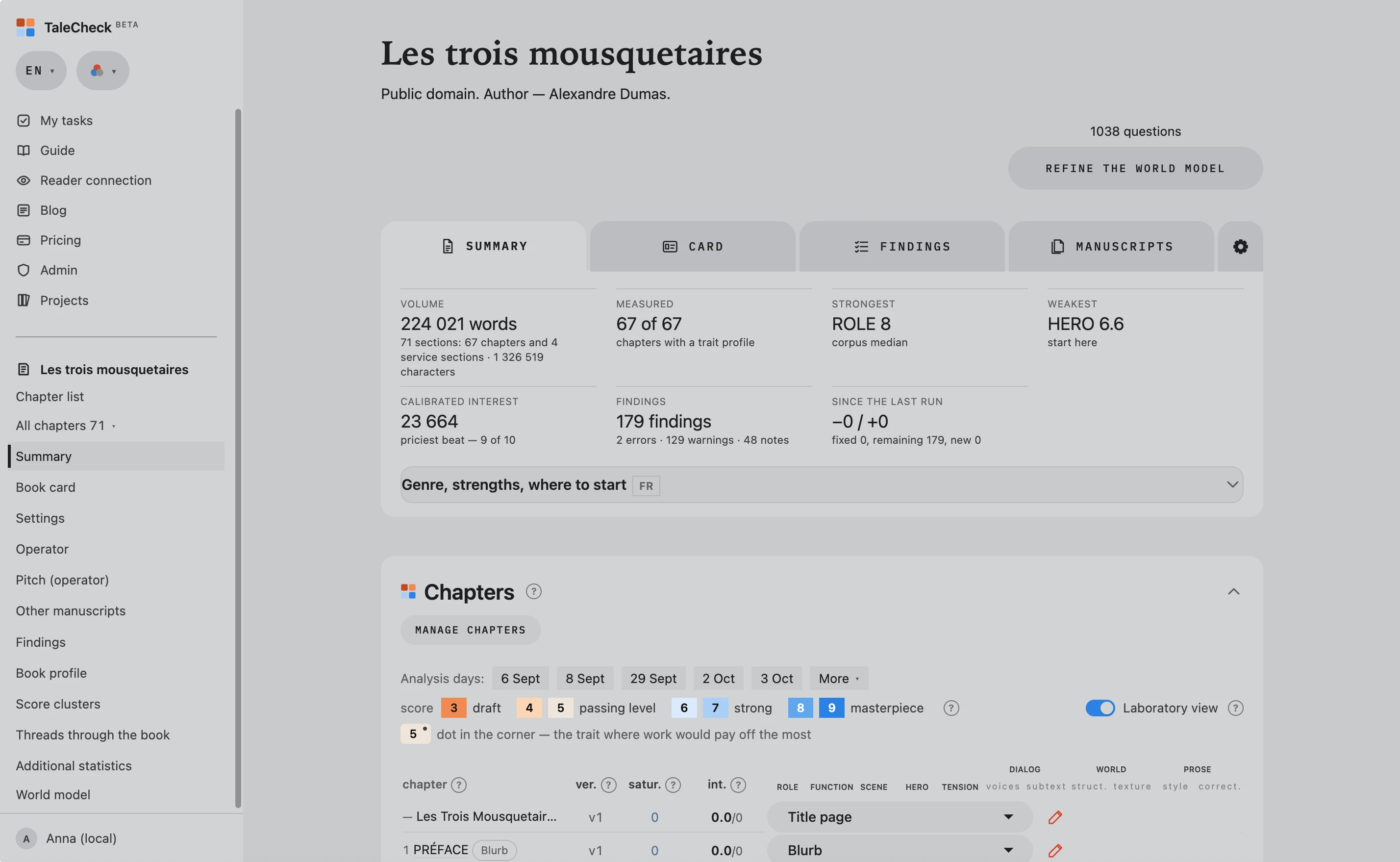
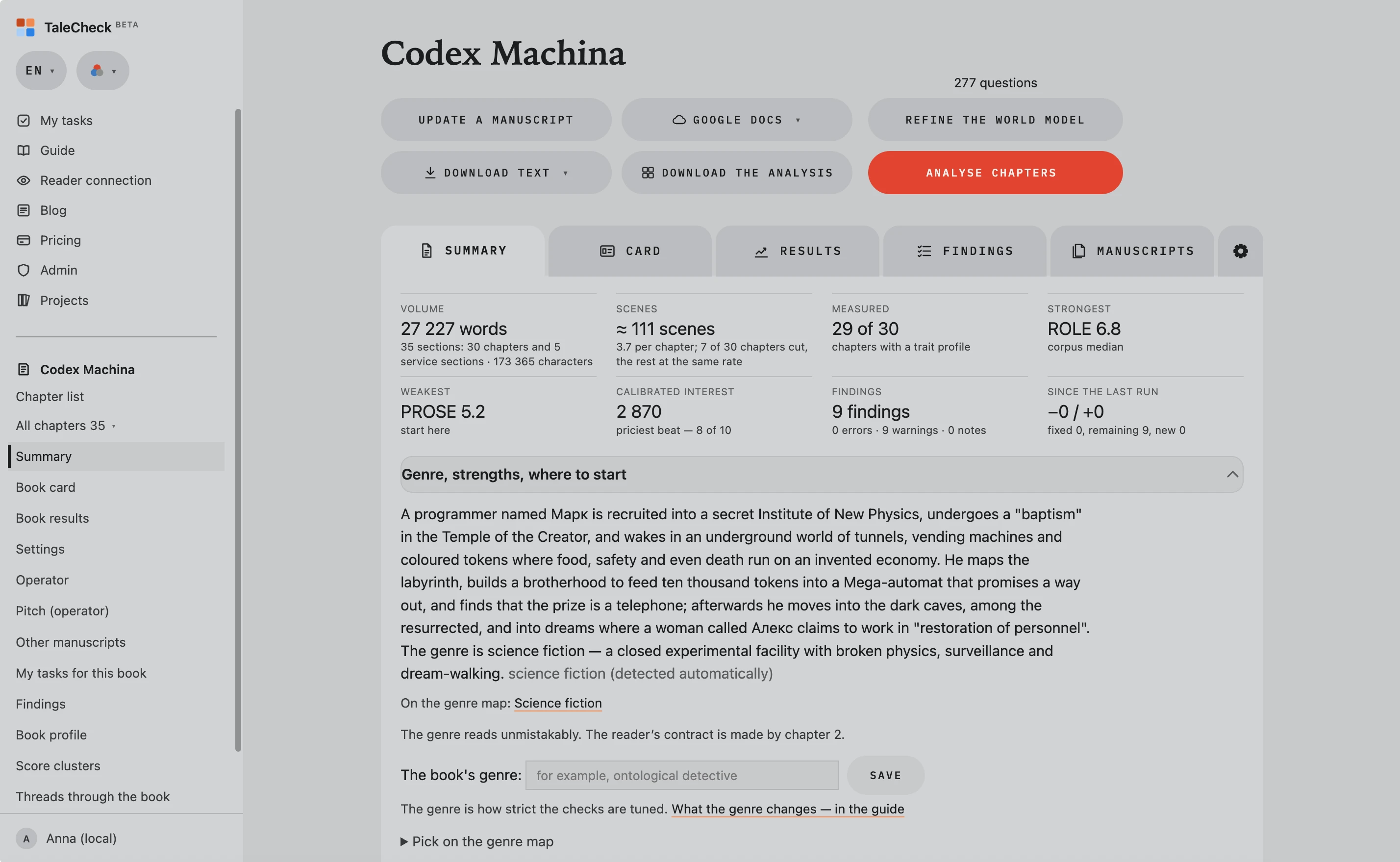
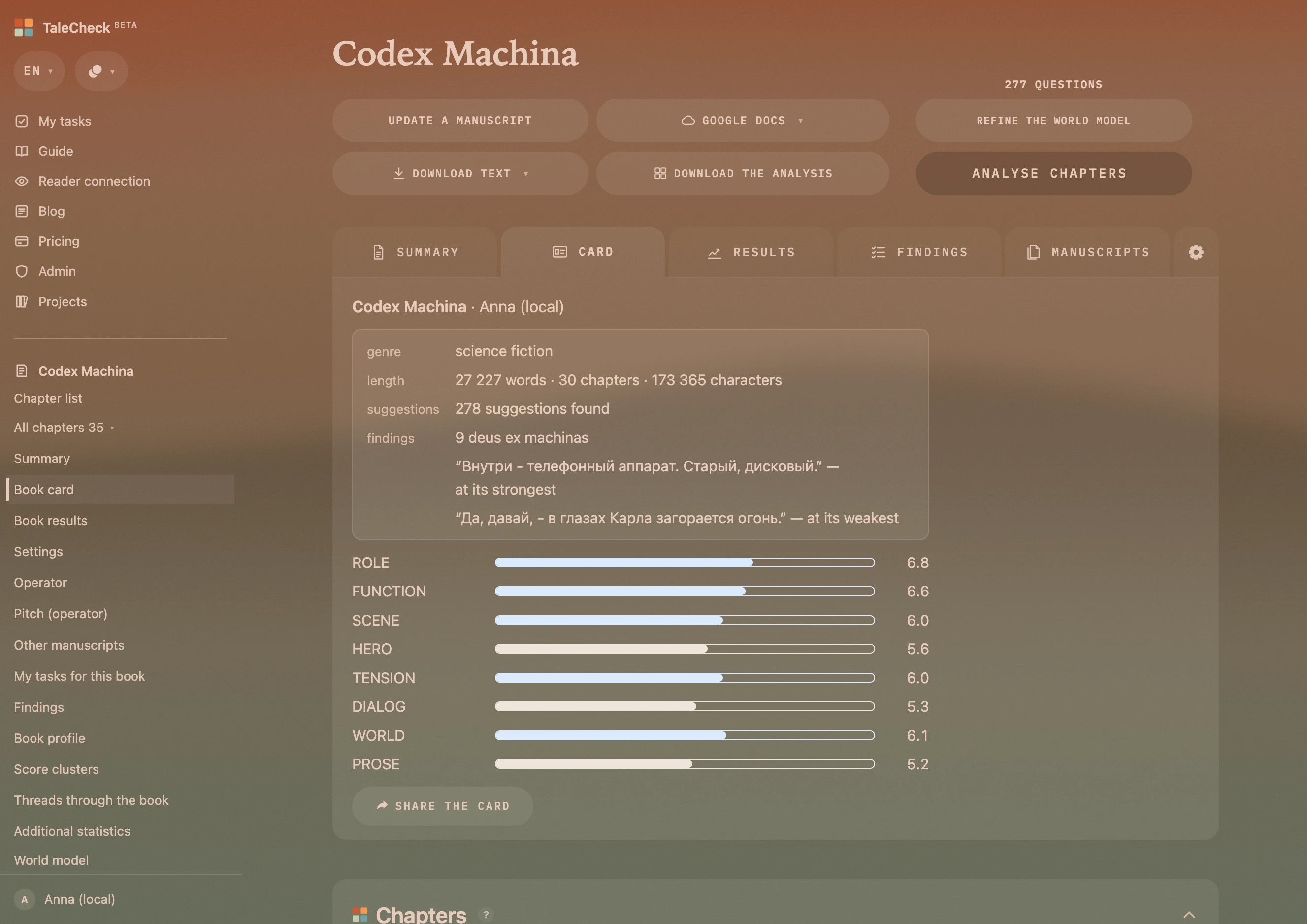
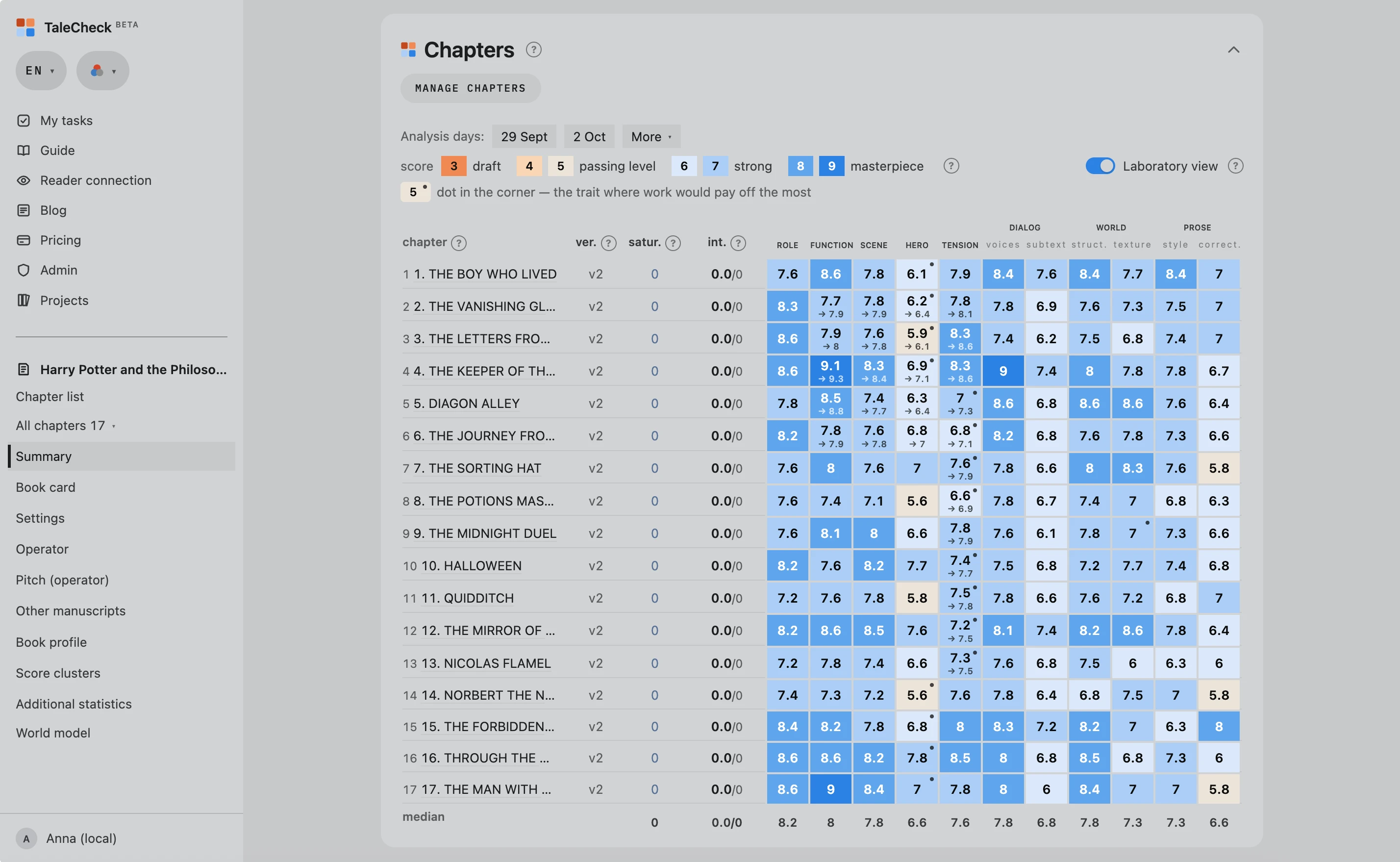
Context
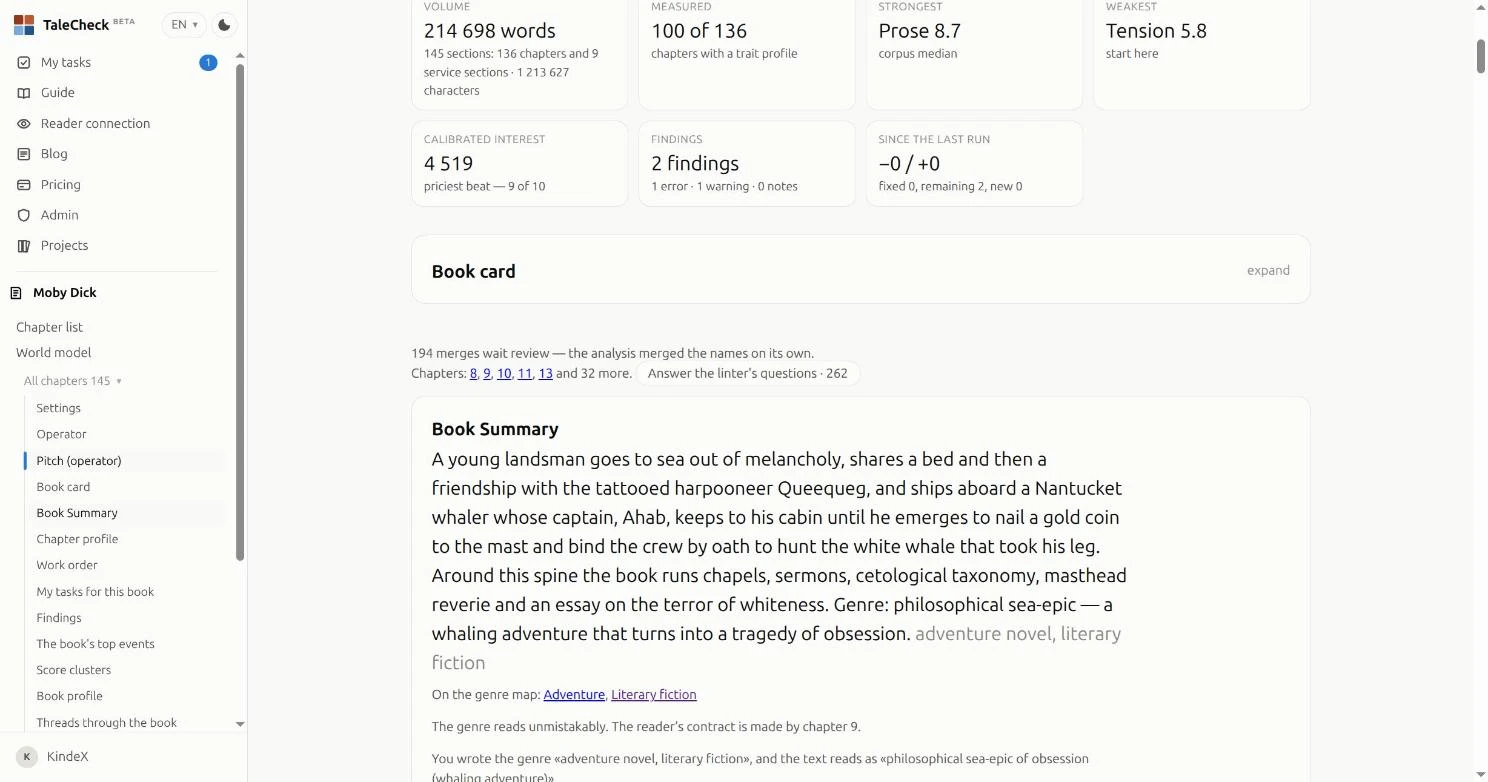
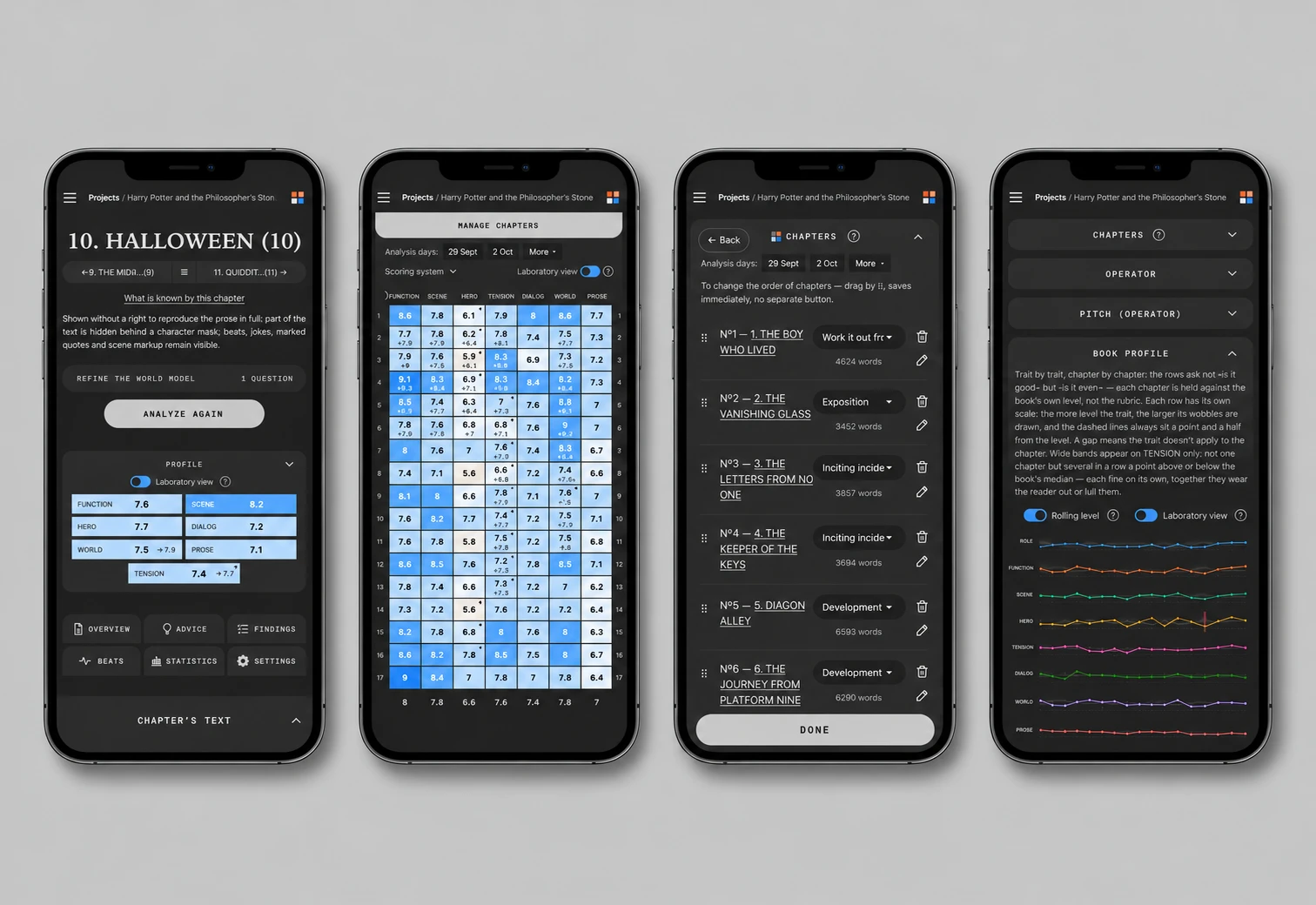
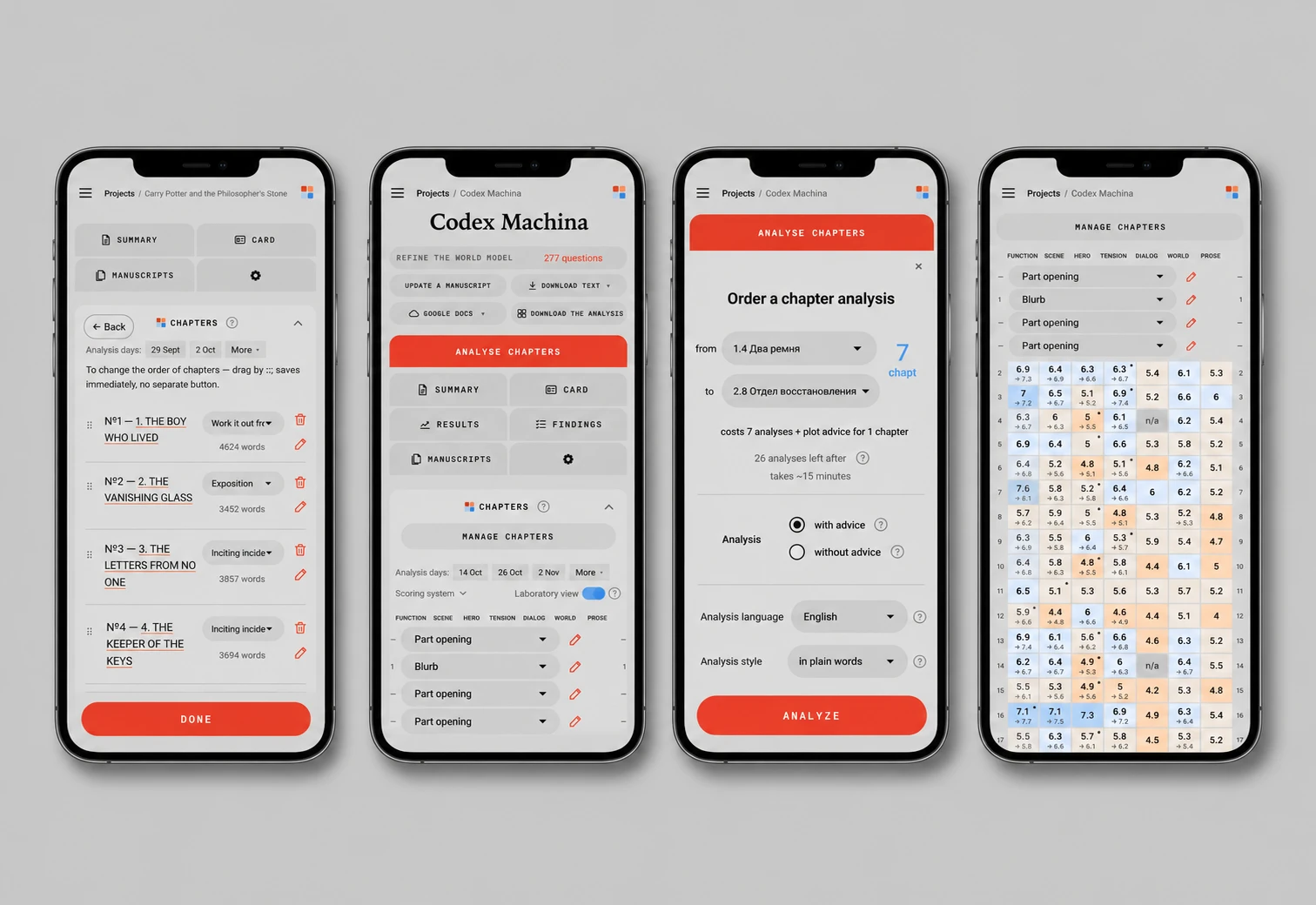
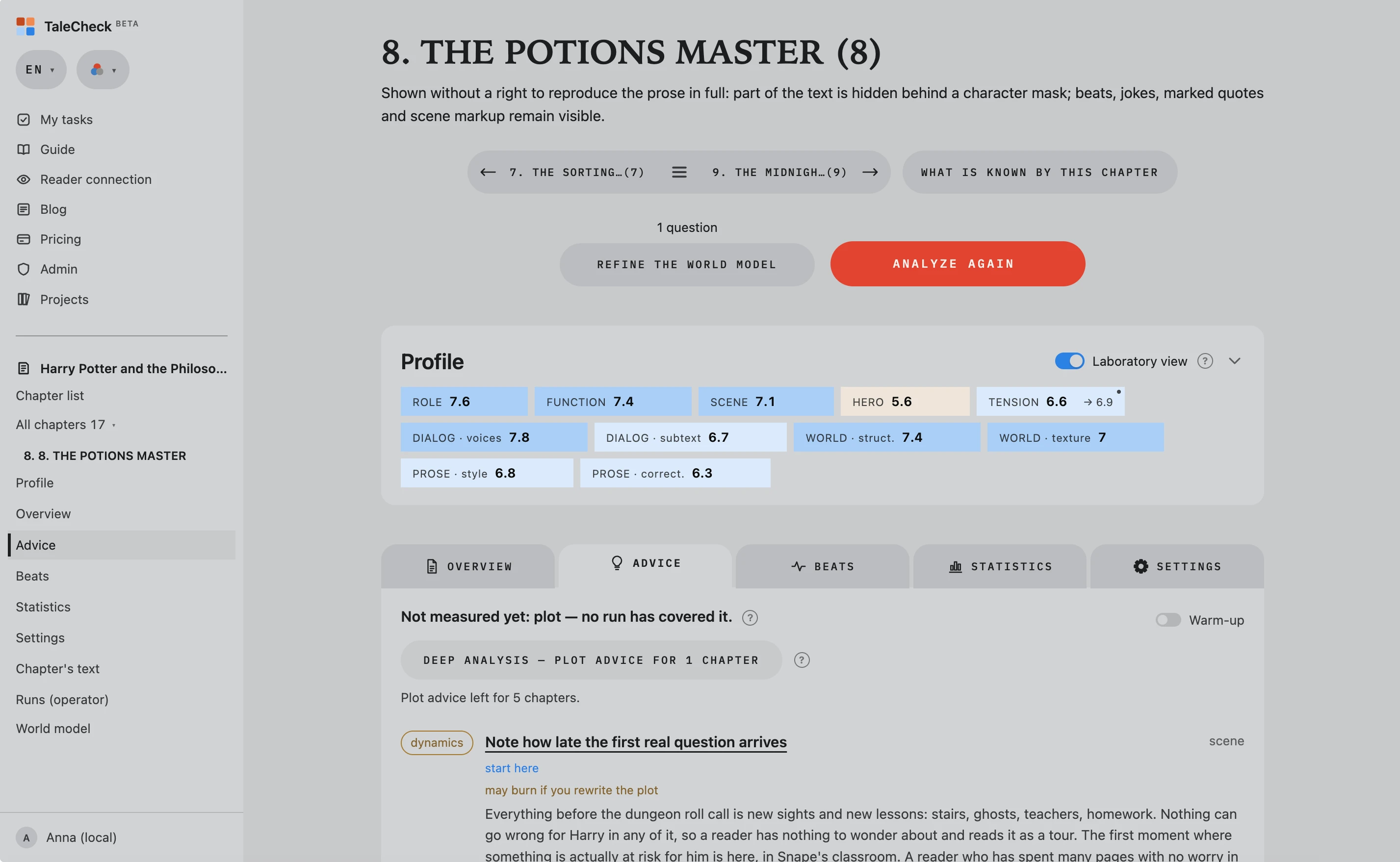
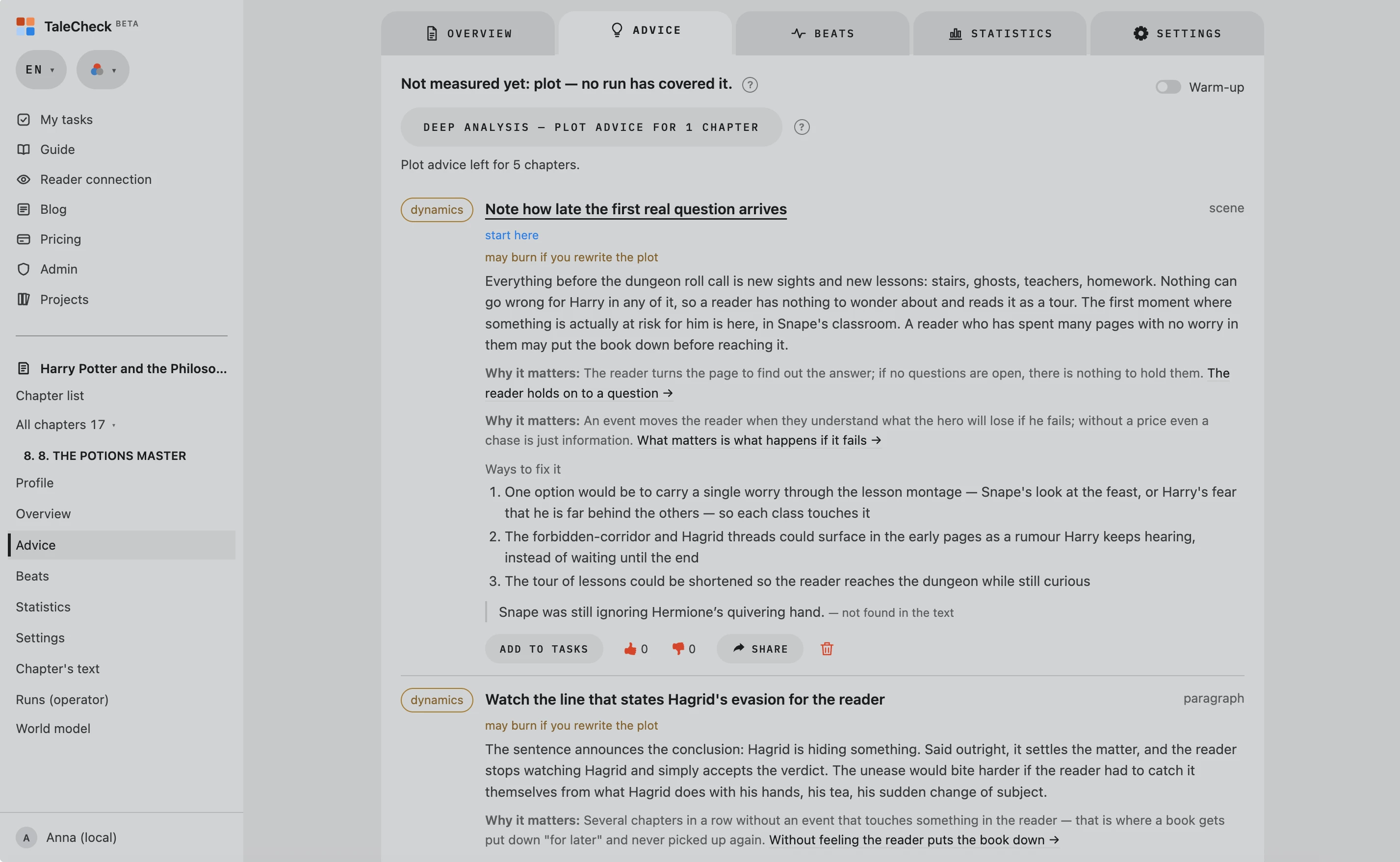
A fresh eye on your book. TaleCheck reads a whole manuscript and finds plot holes, forgotten characters, unfired Chekhov’s guns and sagging pacing, shows what to fix first and gives measurable readiness criteria. It works like ESLint for a novel: an LLM extracts the story’s world model, the author reviews it like a pull request, and 10 deterministic rules, each tied to one of 32 “reader laws”, run over it with no LLM call. I use it on my own writing.
What I did
- Designed the product and architecture; ran Claude Code agents in parallel and reviewed every change: 1,662 commits, ~9,900 tests, from an empty repo to a live product with subscriptions and beta authors in under three months.
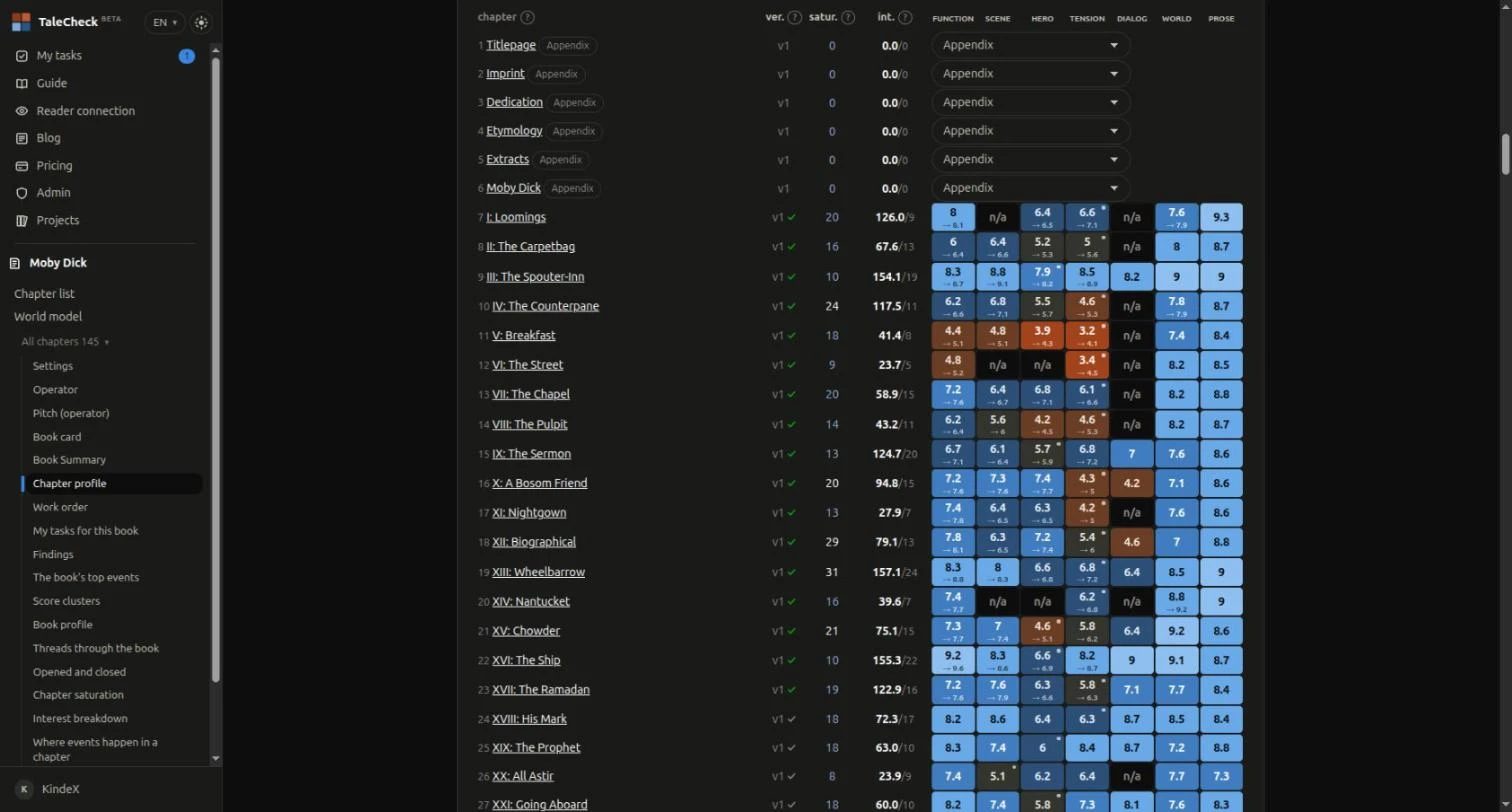
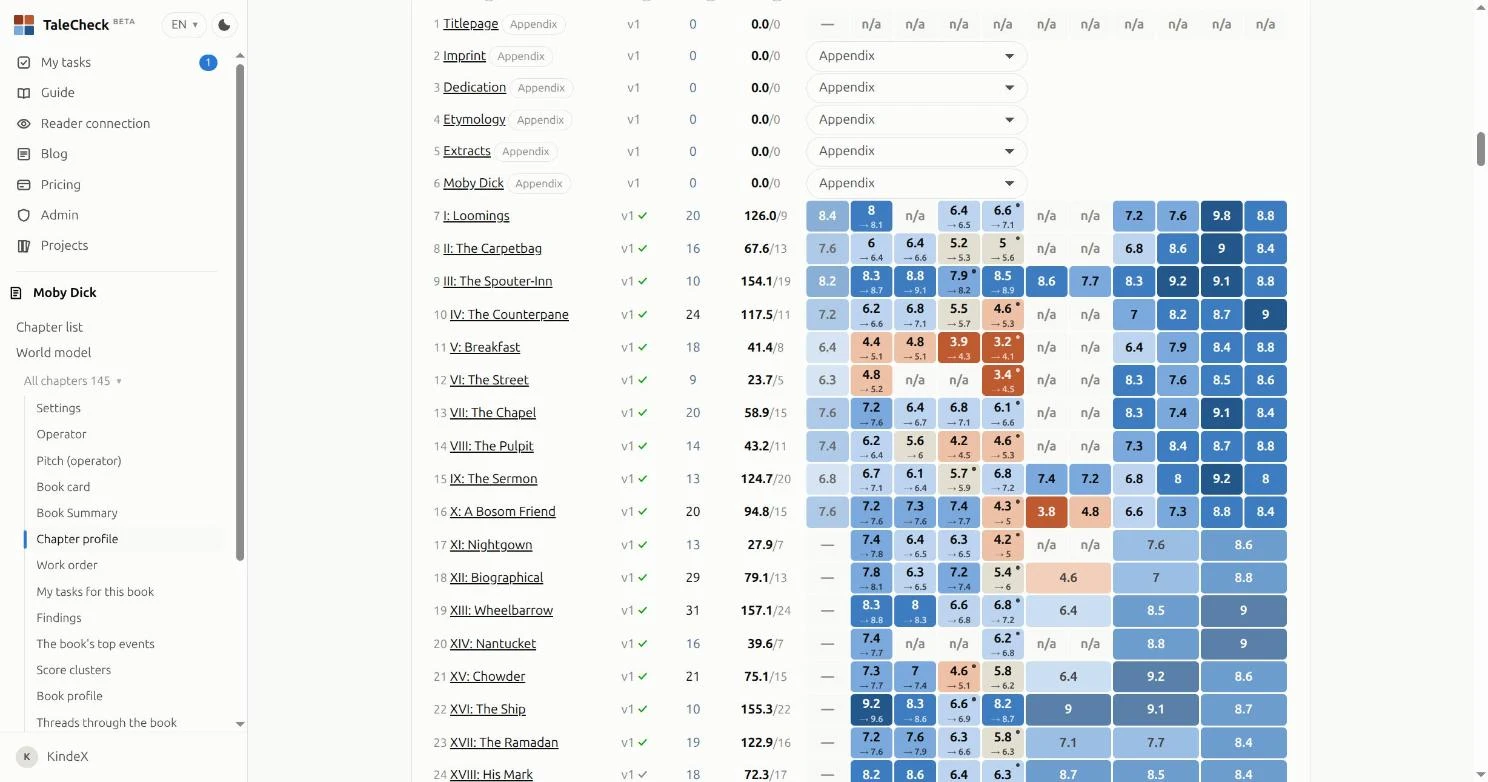
- 11 LLM stages, each pinned to its own model: world-model extraction, an 8-axis chapter evaluation, paragraph-level tension, three passes of suggestions and more; 7 providers with fallback chains and a privacy flag for providers that train on user text.
- About 15 models benchmarked per task on cost, failure rate and run-to-run noise, plus a blind judge on written feedback; the hybrid pipeline is ~4× cheaper than all-Opus.
- Scores that don’t flatter or float: an evidence-backed rubric (no 7 without a quote), a blind evaluator, measured per-axis noise shown as “±”, the median of two runs on the higher tier.
- Prompt caching built into the pipeline: a stable prefix, a warmup call before the parallel window, sequential evaluation runs.
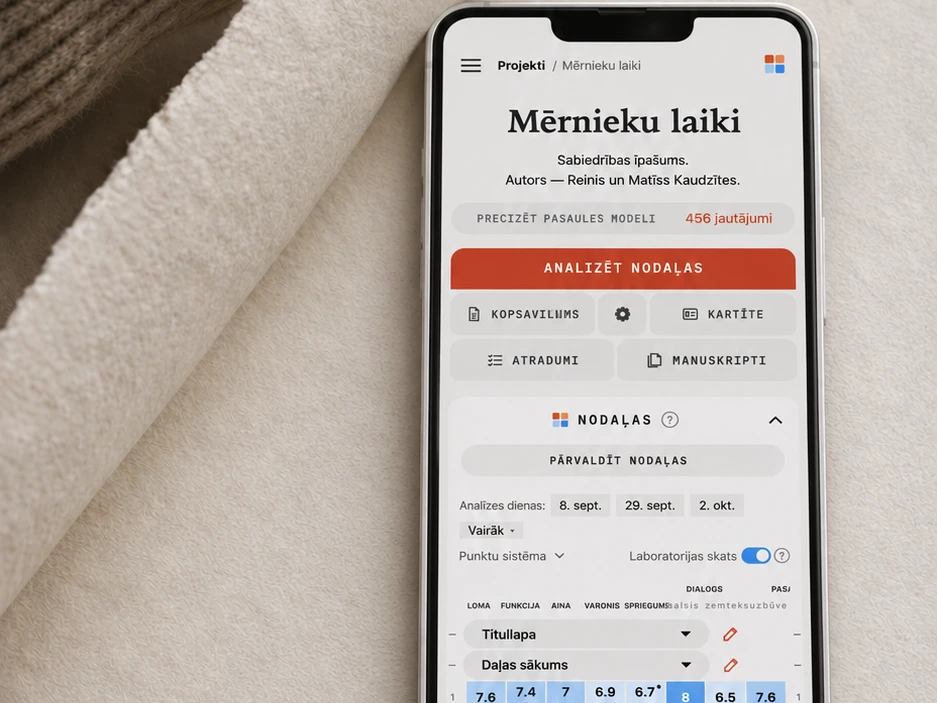
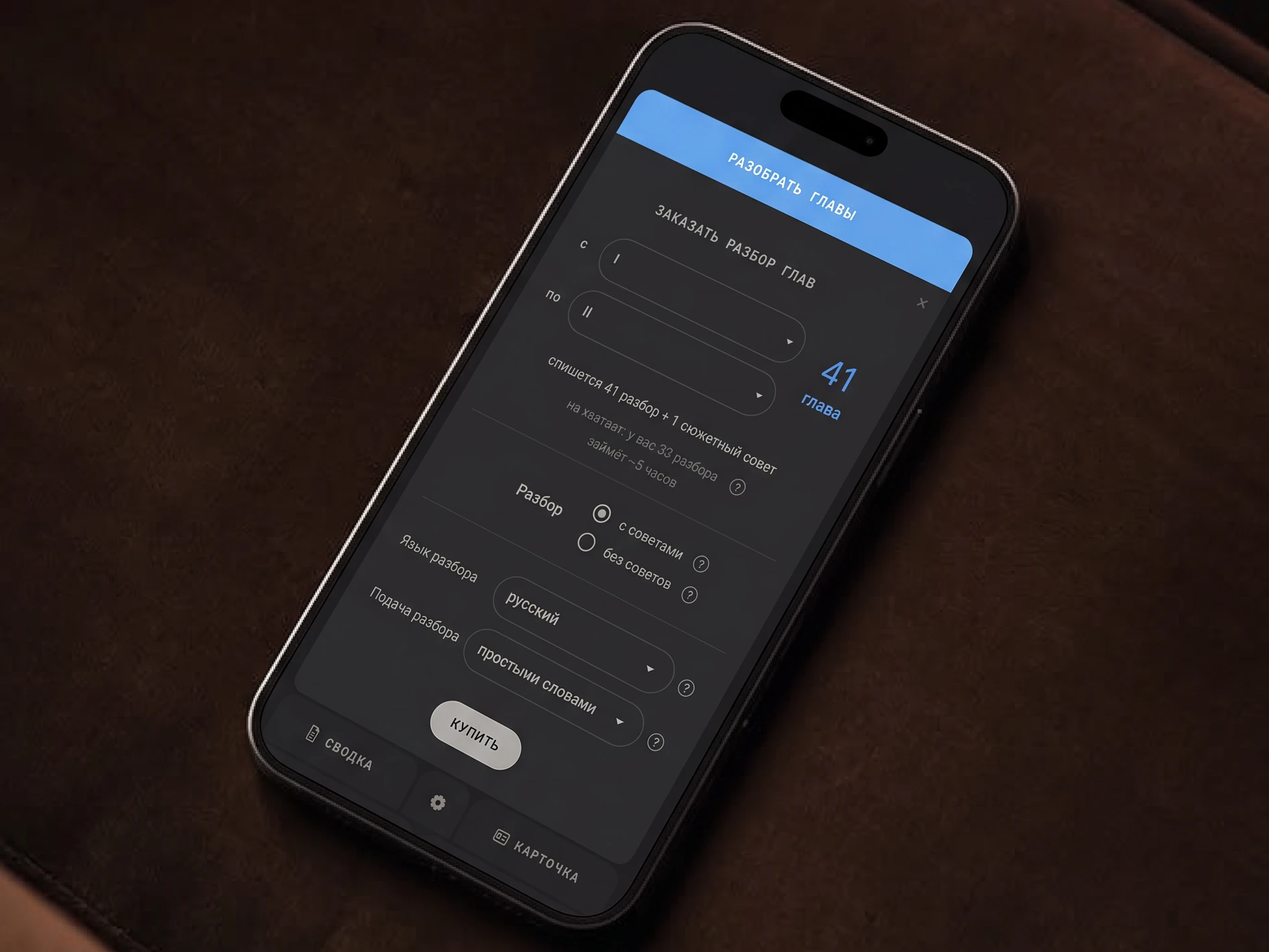
- 13 import formats (docx, epub, fb2, Scrivener, Final Draft and more), Google Drive with full revision history; web, Telegram bot and CLI; TypeScript monorepo with BullMQ workers on 14 queues; four interface languages.
How it works
What authors say
Beta authors; translated from Russian.
“You finish a book — and silence. Nobody tells you whether it came out good or bad, how bad, or what to do about it. That’s where the work stops. You can give it to friends, but they say polite things and, naturally, praise it. So when someone starts taking you apart piece by piece — that’s nothing but bravo and thank you.”
“I considered the screenplay finished — and not by eye: I gave it to readers, collected notes, revised, gave it again until I heard “it’s fine”. Then I opened the TaleCheck review and saw there was still work to do. Dozens of suggestions: not all relevant, some way off, but there are useful ones. It makes me want to sit down and do a new draft.”
“I ran my novel through TaleCheck after I already considered it finished — I won’t rewrite it. But the next book, the one I’m writing now, I’ll definitely check as soon as I have a draft: it comes up with interesting things.”
“Just upload a book to an AI and ask “so, how is it?” — and the result is nothing. That’s why I don’t let AI review my book. But here there’s no fluff, everything is laid out, bitter things aren’t sugar-coated. It’s all built on clear algorithms — that’s a different story.”
TaleCheck in numbers: 81 days
From an empty repo on 26 July to 14 October 2026. Figures are for the main branch.
- site live
- first beta tester
- web without Telegram
- payments live
Estimated for a conventional team: 55–90 person-months (by tasks, by lines of code and by COCOMO II). Actual: 55 working days of one person running Claude Code agents.
Blank lines and comments excluded. Tests grow almost in step with code: four lines of checks for every five lines of product.